US Plant Patent PP17520
Yellow Star Seedless
PUBLIC DOMAIN
Patent expired January 21, 2025. This plant is in the public domain — anyone may propagate and sell it.
No term adjustment or disclaimer is recorded against this patent, so this is the full statutory term — twenty years from the filing date.
The record
- Patent number
- PP17520
- Filed
- January 21, 2005
- Granted
- March 27, 2007
- Expires
- January 21, 2025
- Assignee
- FUTURE FRUIT LLC
- Inventor
- RECUPERO GIUSEPPE REFORGISTO; RUSSO GIUSEPPE; RECUPERO SANTO
No cultivar name of record
This patent does not name the plant, which is unusual for its date — by the mid-1990s nearly every plant patent carried a cultivar name. The grant identifies this one by its number and by a written description instead.
Nothing here is missing from our records: the patent itself states no name. Where one exists we show it, and we do not invent one.
Abstract
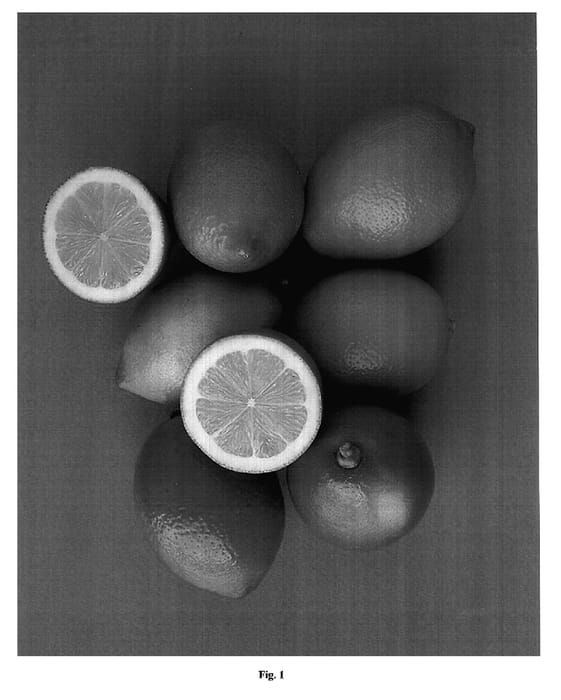
A new and distinct variety of seedless lemon tree named ‘Yellow Star Seedless’ characterized by being a triploid, and having early bearing in August through to about January in the citrus areas of Sicily, Italy and Riverside, Calif. The tree has high yields and bears from year three onwards. The trees are highly tolerant to the Mal secco disease. The variety is further characterized by being genetically seedless. The fruit is well sized and has acceptable rind thickness, acid-sugar ratios and color. The skin has a smooth texture and the fruit stores well. The fruit has an average juice content of 30-40% at harvest. The fruit shape is typically ovoid.
Show the legal claimThe single numbered claim as granted — the legal text that defines what this patent covers.
1. A new and distinct early harvesting variety of seedless lemon tree as described and illustrated called ‘Yellow Star Seedless’ that is characterized as a triploid having early fruit production from about the end of August through to about January in the citrus areas of Sicily, Italy and Riverside, Calif., the trees coming into bearing by year 3, consistently bearing each year thereafter, and having high tolerance to Mal secco disease, the seedless fruit having typically ovoid shape, an average juice content of about 30% to about 40% at harvest, with smooth skin texture, and having acceptable rind thickness, acid-sugar ratios and color.
Read the full patent: US Plant Patent PP17520 in full — the complete specification, every figure, and the file history.