US Plant Patent PP13933
Sunvivapa
Verbena plant named ‘Sunvivapa’
PUBLIC DOMAIN
Patent expired August 17, 2019. This plant is in the public domain — anyone may propagate and sell it.
Twenty years from the filing date would end on November 16, 2021, but this patent ends 822 days earlier — a terminal disclaimer gives term back. A source that calculates twenty years from filing would tell you this plant is still protected when it is already free.
The record
- Patent number
- PP13933
- Filed
- November 16, 2001
- Granted
- July 1, 2003
- Expires
- August 17, 2019
- Assignee
- SUNTORY LTD
- Inventor
- WATANABE YUKI; TACHIBANA RYUICHI
Abstract
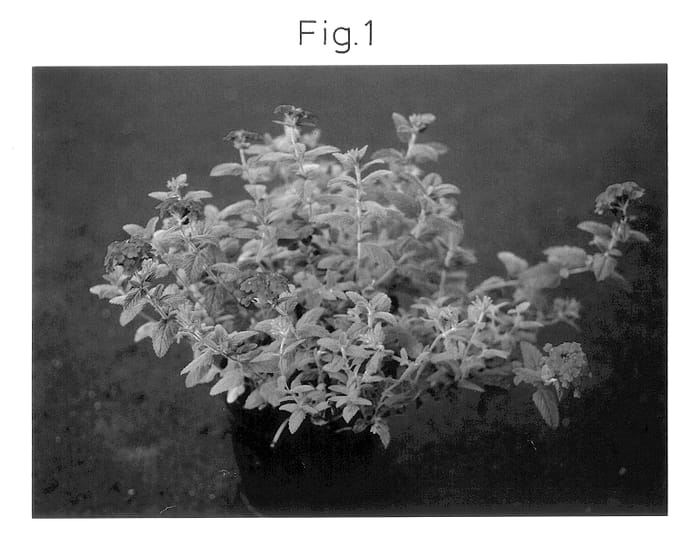
Disclosed herein is a Verbena plant which has an erect growth habit and good plant height. The plant abundantly forms flowers in a spike with a great profusion of blooms. The blooming period is late April to November and the flowering duration is long. The whole plant remains in bloom for a considerable period of time. The flower size is large and the petal color is vivid reddish purple without an eye. The plant is highly tolerant to heat and cold, and has high resistance to pests and diseases, particularly powdery mildew, and a high resistance to rain.
Show the legal claimThe single numbered claim as granted — the legal text that defines what this patent covers.
We claim: 1. A new and distinct variety of verbena plant, substantially as herein illustrated and described, characterized particularly as to novelty by (A) an erect growth habit, (B) a plentiful amount of flowers in a spike with a great profusion of blooms, (C) a long flowering duration, (D) a vivid reddish purple petal color without an eye, and (E) a high resistance to rain, heat, drought, cold diseases and pests.
Read the full patent: US Plant Patent PP13933 in full — the complete specification, every figure, and the file history.