US Plant Patent PP16770
BAIset
Shrub rose plant named ‘BAIset’
PUBLIC DOMAIN
Patent expired March 20, 2025. This plant is in the public domain — anyone may propagate and sell it.
Twenty years from the filing date would end on December 20, 2024. This patent earned 90 days of term adjustment for delay at the Patent Office, which is why it runs longer.
The record
- Patent number
- PP16770
- Filed
- December 20, 2004
- Granted
- July 4, 2006
- Expires
- March 20, 2025
- Assignee
- BAILEY NURSERIES INC
- Inventor
- LIM PETER P
Abstract
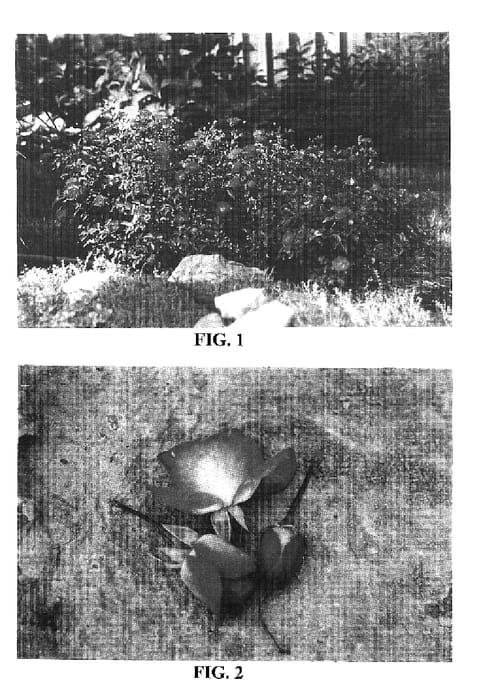
A new and distinct variety of landscape shrub rose plant is provided which forms on a substantially continuous basis attractive semi-double bright fuchsia pink blossoms that change to apricot yellow and near white at the center. The plant exhibits a dense spreading growth habit that makes it an ideal ground cover. The new plant also is well suited for growing as a mass planting. The medium to dark green semi-glossy foliage contrasts nicely with the blossom coloration. High tolerance to Black Spot and Powdery Mildew is displayed. The plant can be grown to advantage to provide attractive ornamentation in parks and gardens.
Show the legal claimThe single numbered claim as granted — the legal text that defines what this patent covers.
1. A new and distinct landscape shrub rose plant characterized by the following combination of characteristics: (a) exhibits a dense spreading growth habit, (b) forms in clusters on a substantially continuous basis attractive semi-double bright fuschsia pink blossoms that change to apricot yellow and near white at the center, (c) forms medium green to dark green semi-glossy foliage, (d) displays high tolerance to Black Spot and Powdery Mildew; and (e) is particularly well suited for growing as attractive ornamentation in parks and gardens; substantially as herein shown and described.
Read the full patent: US Plant Patent PP16770 in full — the complete specification, every figure, and the file history.