US Plant Patent PP26745
Protatu
Rose rootstock named ‘Protatu’
UNDER PATENT
Still under patent. Protection ends July 3, 2034.
Twenty years from the filing date would end on December 31, 2033. This patent earned 184 days of term adjustment for delay at the Patent Office, which is why it runs longer.
The record
- Patent number
- PP26745
- Filed
- December 31, 2013
- Granted
- May 24, 2016
- Expires
- July 3, 2034
- Assignee
- ROSAFLOR B V
- Inventor
- VAN DE POL PETER A
Abstract
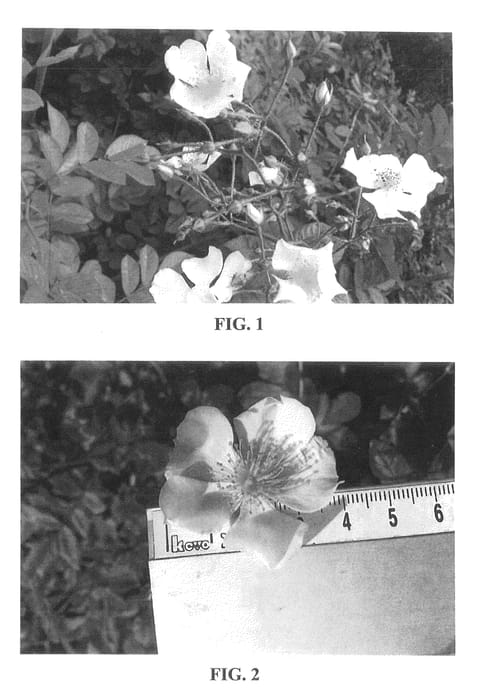
A new and distinct rose plant is provided which is particularly well suited for service as a rootstock for a rose scion cultivar. More specifically, when so used the scion cultivar exhibits a propensity to yield an increase in biomass and the promotion of faster bud release when compared to the results achieved when the scion cultivar is grown on its own roots or on a standard rootstock, such as ‘Natal Briar’. Both higher production rates combined with improved quality in the scion variety are facilitated. The new rose plant displays an upright growth habit with vigorous growth. Small single white cup-shaped blossoms are formed having five generally heart-shaped petals. Orange reproductive organs are prominently displayed at the centers of the blossoms. Medium green leaflets with finely serrated margins and a matte upper surface are displayed.
Show the legal claimThe single numbered claim as granted — the legal text that defines what this patent covers.
I claim: 1. A new and distinct rose plant characterized by the following characteristics: (a) displays an upright growth habit with vigorous growth, (b) forms small single white cup-shaped blossoms having five generally heart-shaped petals with the prominent display of orange reproductive organs at the center of the blossoms, (c) exhibits medium green leaflets with finely serrated margins having a matte upper surface, and (d) when used as a rootstock for a cut rose scion variety exhibits a propensity to yield an increase in biomass and the promotion of faster bud release for the scion variety; substantially as shown and described.
Read the full patent: US Plant Patent PP26745 in full — the complete specification, every figure, and the file history.