US Plant Patent PP29050
Plumcandy XI
Plum tree named ‘Plumcandy XI’
UNDER PATENT
Still under patent. Protection ends December 15, 2036.
No term adjustment or disclaimer is recorded against this patent, so this is the full statutory term — twenty years from the filing date.
The record
- Patent number
- PP29050
- Filed
- December 15, 2016
- Granted
- March 6, 2018
- Expires
- December 15, 2036
- Assignee
- BRADFORD LOWELL GLEN, QUISENBERRY JON M
- Inventor
- BRADFORD LOWELL GLEN; QUISENBERRY JON M
Abstract
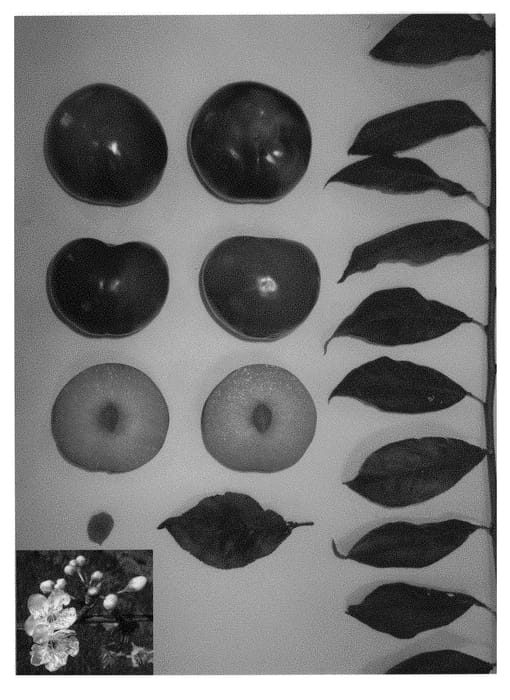
The present invention relates to a plum tree and more particularly to a new and distinct variety broadly characterized by a medium size, moderately vigorous, hardy, and productive tree. Being self-unfruitful, the present variety requires cross pollination from another plum or interspecific tree that blooms during the late season, such as ‘Plumsweet XVI’ interspecific tree (U.S. Plant Pat. No. 26,055). The present variety's moderate abundance of blossoms and pollen entices strong bee activity to facilitate pollination. The fruit matures under the ecological conditions described during early September, with first picking on Sep. 8, 2016. However, the fruit has been observed to hang firm on the tree for up to five weeks. The fruit is uniform, large in size, nearly full red in skin color, clingstone in type, pure orange yellow in flesh color, firm in texture, juicy, and very good in flavor.
Show the legal claimThe single numbered claim as granted — the legal text that defines what this patent covers.
We claim: 1. A new and distinct variety of plum tree, prunus salicina , substantially as illustrated and described, that is most similar to its seed parent, ‘September Yummy’ (U.S. Plant Pat. No. 14,220) plum by having a productive tree, by being self-unfruitful, and by producing plums that ripen in early September and that are nearly full red in skin color, nearly full yellow in flesh color, very good in flavor, juicy, and firm in texture, but is distinguished therefrom by having a somewhat smaller tree, by blooming later in the season, and by producing plums that are larger in size, somewhat oblate instead of globose in shape, sweeter, and clingstone instead of semi-freestone.
Read the full patent: US Plant Patent PP29050 in full — the complete specification, every figure, and the file history.