US Plant Patent PP15802
Sunpimo
Petunia plant named ‘Sunpimo’
PUBLIC DOMAIN
Patent expired January 23, 2024. This plant is in the public domain — anyone may propagate and sell it.
Twenty years from the filing date would end on December 24, 2022. This patent earned 395 days of term adjustment for delay at the Patent Office, which is why it runs longer.
The record
- Patent number
- PP15802
- Filed
- December 24, 2002
- Granted
- June 21, 2005
- Expires
- January 23, 2024
- Assignee
- SUNTORY FLOWERS LTD
- Inventor
- MIYAZAKI KIYOSHI; IWAKI KAZUNARI; ISHIHARA TAKURO
Abstract
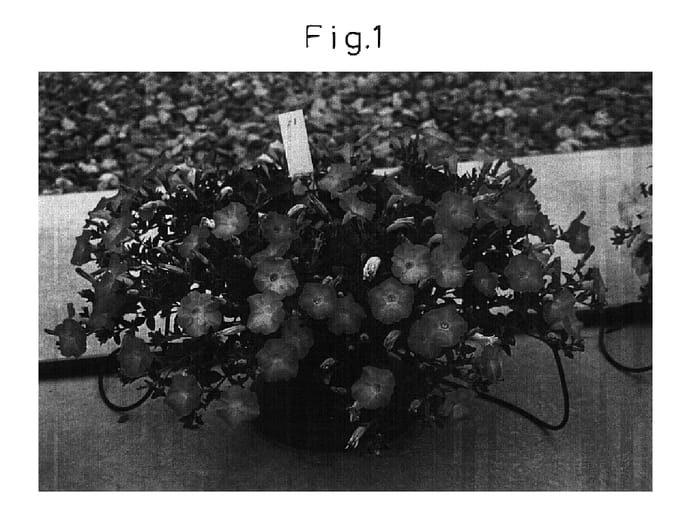
Disclosed herein is a new and distinct variety of Petunia plant having a decumbent habit and long stems. The Petunia plant has abundant branching, and a great profusion of blooms, with the entire plant remaining in bloom for a considerably period of time. The flowers are single and small in size, and the petals are vivid reddish-purple with a lighter pink center. The base color of the corolla throat is yellowish-white and the outside of the corolla tube is yellowish-white. The plant exhibits high resistance to rain, heat, cold and disease.
Show the legal claimThe single numbered claim as granted — the legal text that defines what this patent covers.
1. A new and distinct variety of Petunia plant, substantially as herein illustrated and described, characterized particularly as to novelty by (A) a decumbent growth habit with long stems, (B) abundant branching with a great profusion of blooms and the entire plant remaining in bloom for a considerable period of time, (C) flowers that are single and small in size having vivid reddish-purple petals with a lighter pink center and a yellowish-white corolla throat, and (D) a high resistance to rain, heat, cold and diseases.
Read the full patent: US Plant Patent PP15802 in full — the complete specification, every figure, and the file history.