US Plant Patent PP15259
Sugarpeach
Peach tree named “Sugarpeach”
PUBLIC DOMAIN
Patent expired December 29, 2023. This plant is in the public domain — anyone may propagate and sell it.
No term adjustment or disclaimer is recorded against this patent, so this is the full statutory term — twenty years from the filing date.
The record
- Patent number
- PP15259
- Filed
- December 29, 2003
- Granted
- October 19, 2004
- Expires
- December 29, 2023
- Inventor
- BRADFORD LOWELL GLEN
Abstract
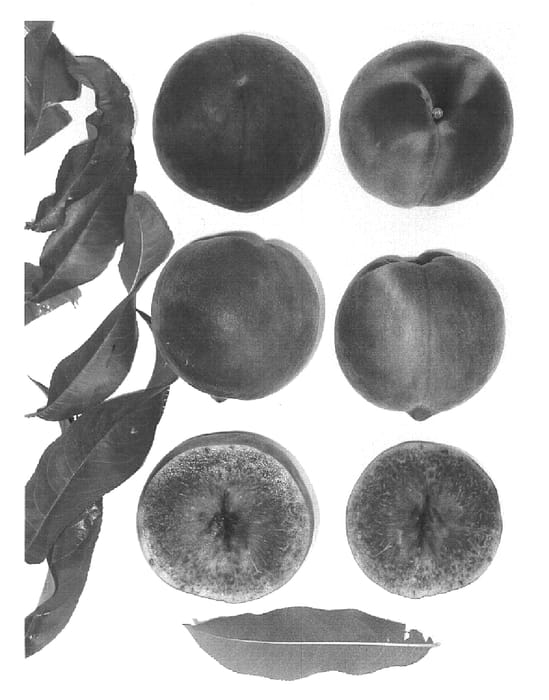
The present invention relates to a peach tree, Prunus persica, and more particularly to a new and distinct variety characterized by a medium size, vigorous, hardy, self-fertile, productive and regular bearing tree. The fruit matures under the ecological conditions described in mid July, with first picking on Jul. 16, 2003. The fruit is very large in size, sweet and acidic in flavor, globose with some tipping on the apex in shape, clingstone in type, yellow with significant red bleeding in flesh color, mostly red in skin color, and extremely firm to non-melting in texture. The present variety was the result of a nectarine by peach hybridization.
Show the legal claimThe single numbered claim as granted — the legal text that defines what this patent covers.
I claim: 1. A new and distinct variety of peach tree, substantially as illustrated and described, that is most similar to its selected pollen parent, ‘Diamond Princess’ (U.S. Plant Pat. No. 7,066) peach, by producing peaches that are mostly red in skin color, sweet and acidic in flavor, and globose in shape, but is distinguished therefrom by having a small blossom instead of large and by producing fruit that is clingstone instead of freestone, that is much firmer and virtually non-melting in flesh texture, that is yellow with dark red bleeding in flesh color, that holds on the tree much longer, that is much larger in size, and that matures about ten days later, all of which can be attributed to the selected seed parent ‘August Red’ (U.S. Plant Pat. No. 6,363) nectarine, and is further distinguished from both by having protruding tips at the apex on much of the fruit.
Read the full patent: US Plant Patent PP15259 in full — the complete specification, every figure, and the file history.