US Plant Patent PP28339
Red Princess III
Peach tree named ‘Red Princess III’
UNDER PATENT
Still under patent. Protection ends February 3, 2036.
Twenty years from the filing date would end on December 11, 2035. This patent earned 54 days of term adjustment for delay at the Patent Office, which is why it runs longer.
The record
- Patent number
- PP28339
- Filed
- December 11, 2015
- Granted
- August 29, 2017
- Expires
- February 3, 2036
- Assignee
- BRADFORD LOWELL GLEN, QUISENBERRY JON M
- Inventor
- BRADFORD LOWELL GLEN; QUISENBERRY JON M
Abstract
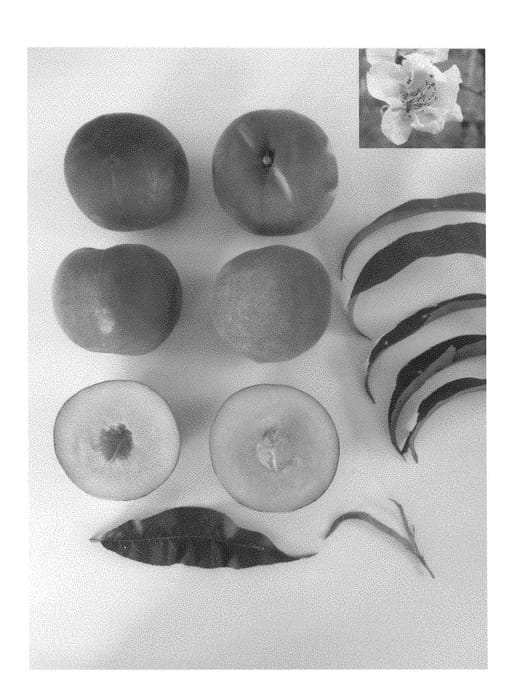
The present invention relates to a new and distinct variety of peach tree, Prunus persica , broadly characterized by a large size, vigorous, hardy, self-fertile, productive and regular bearing tree. The variety blooms during the early to mid season and requires about 500 chilling hours. The fruit matures under the ecological conditions described in the latter part of May, with first picking on May 23, 2015. The fruit is uniform, large in size, acidic with traditional peach flavor, globose to slightly oblate in shape, clingstone in type, non-melting in texture, yellow in flesh color, virtually full red in skin color, and has a bitter tasting kernel.
Show the legal claimThe single numbered claim as granted — the legal text that defines what this patent covers.
We claim: 1. A new and distinct variety of peach tree, substantially as illustrated and described, that is most similar to ‘June Time’ (U.S. Plant Pat. No. 23,530) peach by being vigorous, by having a large tree, by having reniform leaf glands, by being self-fertile, by having large blossoms, and by producing fruit that is nearly globose in shape, nearly full red in skin color, yellow in flesh color, large in size, and non-melting in texture, but is distinguished therefrom by blooming earlier, by requiring less chilling hours, and by producing fruit that has a bitter instead of sweet kernel and that matures about ten days earlier.
Read the full patent: US Plant Patent PP28339 in full — the complete specification, every figure, and the file history.