US Plant Patent PP18782
Arthur V
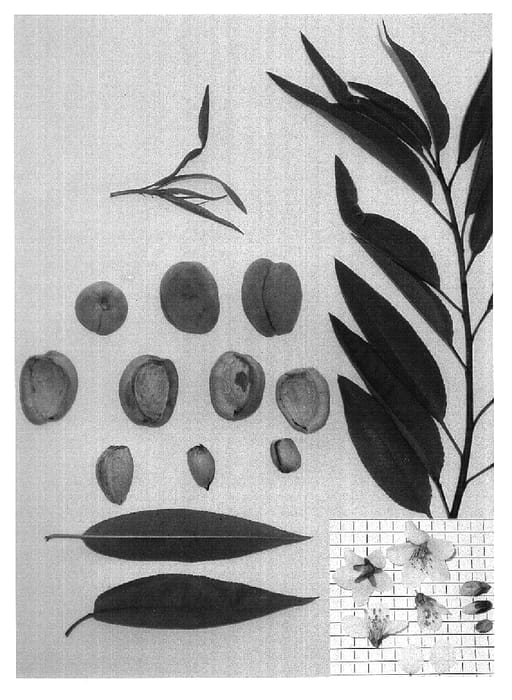
Peach-almond hybrid tree named ‘Arthur V’
PUBLIC DOMAIN
Patent expired August 11, 2026. This plant is in the public domain — anyone may propagate and sell it.
Twenty years from the filing date would end on June 26, 2026. This patent earned 46 days of term adjustment for delay at the Patent Office, which is why it runs longer.
The record
- Patent number
- PP18782
- Filed
- June 26, 2006
- Granted
- May 6, 2008
- Expires
- August 11, 2026
- Assignee
- BRIGHT WILLIAM, BRIGHT EDWARD, BRIGHT JAMES, BRIGHT VIRGINIA
- Inventor
- BRIGHT WILLIAM; BRIGHT VIRGINIA; BRIGHT JAMES; BRIGHT EDWARD
Abstract
The present invention relates to a peach-almond hybrid tree, Prunus sp., and more particularly to a new and distinct variety broadly characterized by a very large, extremely vigorous, hardy, self-sterile, productive and regular bearing tree. The fruit matures under the ecological conditions described in early September, with the first picking on Sep. 4, 2004. The tree is commercially useful as a rootstock for almost all prunus species. The variety was developed as a first generation cross using ‘Titan’ (unpatented) almond as the selected seed parent and ‘Nemaguard’ (unpatented) peach as the selected pollen parent.
Show the legal claimThe single numbered claim as granted — the legal text that defines what this patent covers.
1. A new and distinct variety of peach-almond hybrid tree, substantially as illustrated and described, that is most similar to ‘Hansen 2168’ (U.S. Plant Pat. No. 5,210) by being a peach almond hybrid tree that is utilized primarily as a rootstock for prunus varieties that is vigorous, nematode resistant, deep rooting and drought tolerant, but is distinguished therefrom by having globose glands, by blooming later, by having fruit that matures in September instead of August, by having light yellow green flesh toward the stone instead of red, and by having a sweet kernel that can be used as an almond for human consumption instead of a bitter kernel.
Read the full patent: US Plant Patent PP18782 in full — the complete specification, every figure, and the file history.