US Plant Patent PP29727
Andes Nec-2
Nectarine tree named ‘Andes Nec-2’
UNDER PATENT
Still under patent. Protection ends February 17, 2033.
Twenty years from the filing date would end on February 25, 2035, but this patent ends 738 days earlier — a terminal disclaimer gives term back. A source that calculates twenty years from filing would tell you this plant is still protected when it is already free.
The record
- Patent number
- PP29727
- Filed
- February 25, 2015
- Granted
- October 9, 2018
- Expires
- February 17, 2033
- Assignee
- UNIV CHILE, VIVEROS ASOCIADOS CHILE LTDA, VIVEROS ASOCIADOS CHILE LTDA ANA CHILE ANDES NURSERY ASS
- Inventor
- INFANTE RODRIGO
Abstract
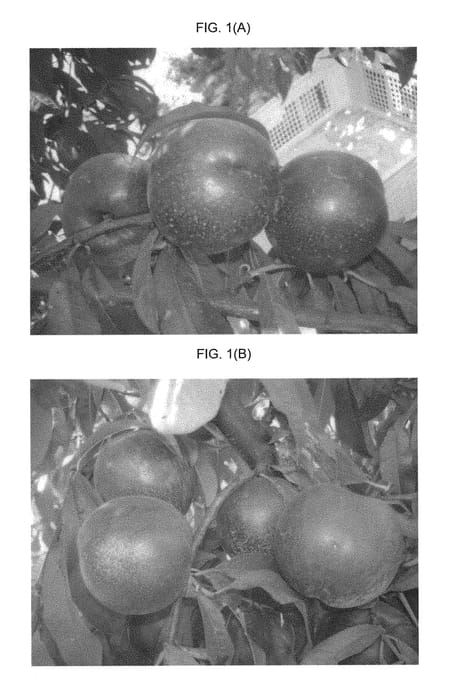
A new and distinct variety of clingstone nectarine tree denominated ‘Andes Nec-2’ which is characterized by the fruit of which maturing a week after the ‘August Red’ nectarine that matures at the end of the harvest season. The variety has a slow pulp softening rate commencing during the last two weeks before the commercial harvest, therefore, delaying the harvest. This produces fruit with increased size and soluble solids content. The variety has a high postharvest life potential, and will maintain its initial sensory quality at low temperatures over a period of time. Its fruit is striped/solid red blush over a light yellow background color, with a round, symmetrical fruit shape.
Show the legal claimThe single numbered claim as granted — the legal text that defines what this patent covers.
Having thus described and illustrated the new variety of nectarine tree, I claim: 1. A new and distinct variety of nectarine tree, substantially as illustrated and described, that is similar to ‘August Red’ nectarine by producing nectarines that mature at the end of the harvest season, yellow flesh, clingstone in type, and firm in texture, but is distinguished therefrom by maturing a week after, and by producing fruit with a better and longer postharvest potential.
Read the full patent: US Plant Patent PP29727 in full — the complete specification, every figure, and the file history.