US Plant Patent PP17510
Limoneira seedless
PUBLIC DOMAIN
Patent expired March 7, 2025. This plant is in the public domain — anyone may propagate and sell it.
Twenty years from the filing date would end on January 26, 2025. This patent earned 40 days of term adjustment for delay at the Patent Office, which is why it runs longer.
The record
- Patent number
- PP17510
- Filed
- January 26, 2005
- Granted
- March 20, 2007
- Expires
- March 7, 2025
- Assignee
- LIMONEIRA COMPANY
- Inventor
- GRECH NIGEL; EKENLER ERCAN
No cultivar name of record
This patent does not name the plant, which is unusual for its date — by the mid-1990s nearly every plant patent carried a cultivar name. The grant identifies this one by its number and by a written description instead.
Nothing here is missing from our records: the patent itself states no name. Where one exists we show it, and we do not invent one.
Abstract
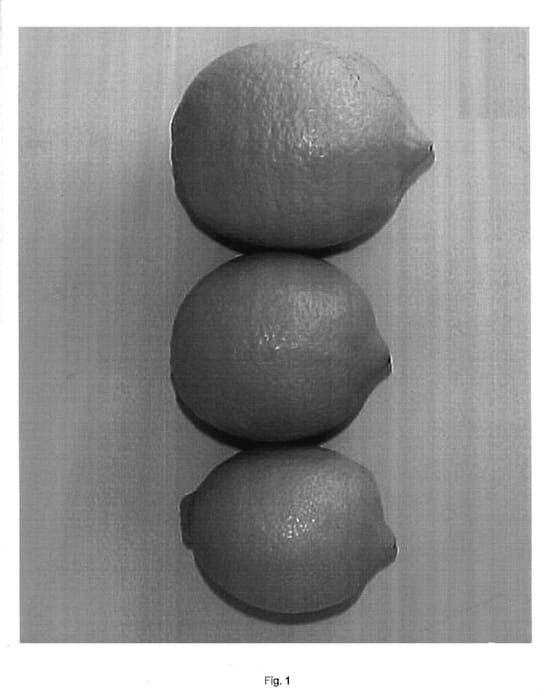
A new and distinct cultivar of seedless lemon tree named ‘Limoneira Seedless’ characterized by early bearing in August through to March in the inland citrus areas of South East Turkey and Riverside, Calif. The trees can be induced to flower by irrigation stress in summer, resulting in a late spring crop of lemons. It is further characterized by being commercially seedless. The fruit has acceptable rind thickness, acid-sugar ratios and color. The skin has a smooth texture. The fruit has an average juice content of 30-40% at harvest. The fruit shape is typically round to slightly oval elliptical.
Show the legal claimThe single numbered claim as granted — the legal text that defines what this patent covers.
1. A new and distinct variety of seedless lemon tree as described and illustrated that is characterized by early fruit production from about August through to about March in the inland citrus areas of South East Turkey and Riverside, Calif., the plant being capable of being induced to flower by irrigation stress in summer resulting in a late spring crop of lemons, the seedless fruit having typically ovoid shape, an average juice content of about 30% to about 40% at harvest, with smooth skin texture, and having acceptable rind thickness, acid-sugar ratios and color.
Read the full patent: US Plant Patent PP17510 in full — the complete specification, every figure, and the file history.