US Plant Patent PP16412
Interspecific tree
PUBLIC DOMAIN
Patent expired April 19, 2025. This plant is in the public domain — anyone may propagate and sell it.
Twenty years from the filing date would end on November 8, 2024. This patent earned 162 days of term adjustment for delay at the Patent Office, which is why it runs longer.
The record
- Patent number
- PP16412
- Filed
- November 8, 2004
- Granted
- April 4, 2006
- Expires
- April 19, 2025
- Inventor
- ZAIGER GARY NEIL; GARDNER LEITH MARIE; ZAIGER GRANT GENE
No cultivar name of record
This patent does not name the plant, which is unusual for its date — by the mid-1990s nearly every plant patent carried a cultivar name. The grant identifies this one by its number and by a written description instead.
Nothing here is missing from our records: the patent itself states no name. Where one exists we show it, and we do not invent one.
Abstract
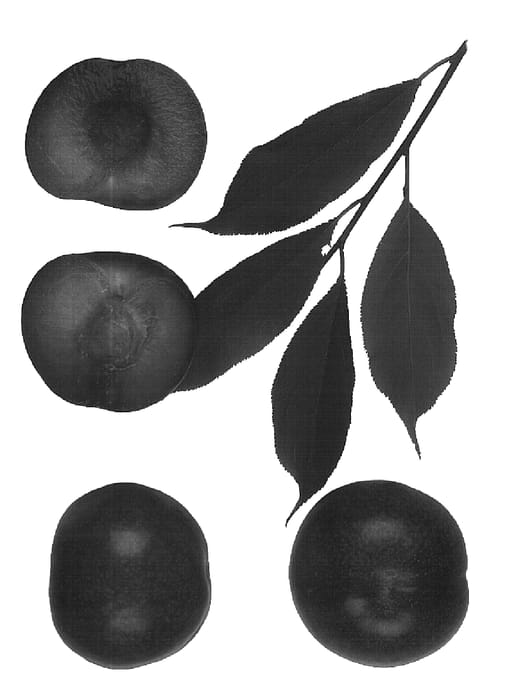
A new and distinct variety of interspecific tree. The following features of the tree and its fruit are characterized with the tree budded on ‘Citation’ Rootstock (U.S. Plant Pat. No. 5,112), grown on Handford sandy loam soil with Storie Index rating 95, in USDA Hardiness Zone 9, near Modesto, Calif., with standard commercial fruit growing practices, such as pruning, thinning, spraying, irrigation and fertilization. Its novelty consist of the following combination of desirable features: 1. Heavy and regular production of fruit. 2. Fruit with very good flavor and eating quality. 3. Fruit with an attractive red flesh color. 4. Relatively uniform size fruit throughout the tree. 5. Fruit holding firm on the tree 10 to 14 days after maturity (shipping ripe).
Show the legal claimThe single numbered claim as granted — the legal text that defines what this patent covers.
1. A new and distinct variety of interspecific tree, substantially as illustrated and described, characterized by its large size, vigorous, upright growth, heavy production and regular bearing of attractive, large size fruit with very good flavor and eating quality; the fruit is further characterized by being relatively uniform in size throughout the tree and holding firm on the tree 10 to 14 days after maturity (shipping ripe).
Read the full patent: US Plant Patent PP16412 in full — the complete specification, every figure, and the file history.