US Plant Patent PP24301
Annie's Blue
Hydrangea plant named ‘Annie's Blue’
UNDER PATENT
Still under patent. Protection ends August 11, 2032.
Twenty years from the filing date would end on June 22, 2032. This patent earned 50 days of term adjustment for delay at the Patent Office, which is why it runs longer.
The record
- Patent number
- PP24301
- Filed
- June 22, 2012
- Granted
- March 11, 2014
- Expires
- August 11, 2032
- Assignee
- CP DELAWARE INC, LIGHTY RICHARD W
- Inventor
- LIGHTY RICHARD W
Abstract
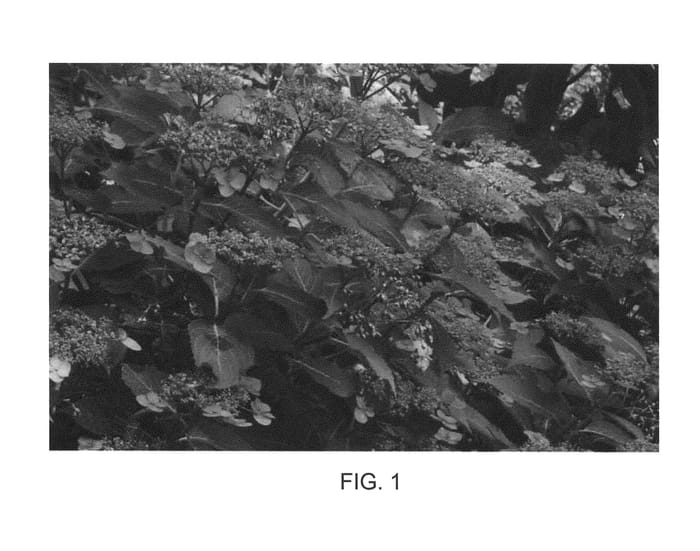
A new and distinct Hydrangea serrata plant is provided that was discovered as a newly found seedling in a cultivated area. Attractive large blue to mauve lacecap flowers are formed that tend to be more blue when grown in acidic soils and more mauve when grown in neutral to basic soils. Strong sturdy branches are formed. Delicate yellow-green foliage is displayed. The plant is more floriferous than the ‘Blue Billow’ cultivar (non-patented in the United States) and the foliage is smaller than that of such comparative cultivar. Winter hardiness to U.S.D.A. Zone No. 6b has been observed. The plant is well suited for providing attractive ornamentation in the landscape. The cut flowers also can be included in cut flower arrangements.
Show the legal claimThe single numbered claim as granted — the legal text that defines what this patent covers.
I claim: 1. A new distinct Hydrangea serrata plant that displays the following combination of characteristics: (a) displays in abundance attractive large blue to mauve lacecap flowers that tend to be more blue when grown in acidic soils and more mauve when grown in neutral to basic soils, (b) displays attractive delicate yellow-green foliage, (c) displays sturdy branches, (d) is winter hardy to U.S.D.A. Hardiness Zone 6b, and (e) is well suited for growing as attractive ornamentation in the landscape; substantially as illustrated and described.
Read the full patent: US Plant Patent PP24301 in full — the complete specification, every figure, and the file history.