US Plant Patent PP13203
Ranisahiba
High yielding stable plant of Rosa damascena, called ‘Ranisahiba’
PUBLIC DOMAIN
Patent expired March 29, 2020. This plant is in the public domain — anyone may propagate and sell it.
No term adjustment or disclaimer is recorded against this patent, so this is the full statutory term — twenty years from the filing date.
The record
- Patent number
- PP13203
- Filed
- March 29, 2000
- Granted
- November 12, 2002
- Expires
- March 29, 2020
- Assignee
- COUNCIL SCIENT IND RES
- Inventor
- PATRA NIRMAL KUMAR; KUMAR SUSHIL; KHANUJA SUMAN PREET SINGH; SHASNEY AJIT KUMAR; KALRA ALOK; SINGH HERIKESH BAHADUR; SINGH HEMENDRA PRATAP; TANVEER HASAN; SINGH VED RAM; MENGI NARESHWAR; RAJPUT DHARMENDRA KUMAR; NEGI MAHENDRA SINGH; TYAGI NEERAJ KUMAR; RAM PALTOO; SINGH VIJAY PAL; SINGH ANAND; KUMAR BIRENDRA; SINGH JITENDRA PAL; KUMAR VIJAY; SHARMA SHIV RAM
Abstract
The invention provides a novel half-sib damask rose progeny christened as "Ranisahiba' and characterized by its doubled per se oil content and oil yield, high flower biomass with synchronous flowering and firmly fixed morphophysiological plant-traits.
Show the legal claimThe single numbered claim as granted — the legal text that defines what this patent covers.
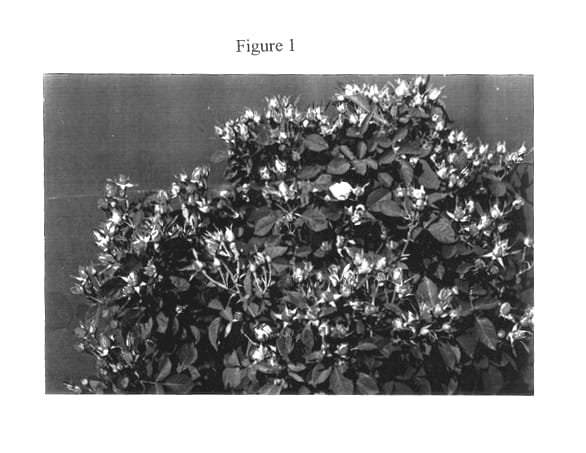
We claim: 1. A novel, high yielding stable plant of Rosa damascena , designated ‘Ranisahiba’ as described and illustrated, and having the following firmly fixed new combination of characteristics, distinct from the known varieties/land races of R. damascena: (a) Light green stem, red purple (73D) flowers, globular canopy allowing equal distribution of sunlight to the flowers, that enhances flower biomass; (b) High flower yield; (c) Additional economic yield off-season; (d) Yielding oil containing 30-35% geraniol content, 5-7% geranyl acetate content, 4-5% citronellol, 7-8% PE alcohol and 1-3% linalool content; and (e) High geraniol content coupled with wax content of about 6-7.1%.
Read the full patent: US Plant Patent PP13203 in full — the complete specification, every figure, and the file history.