US Plant Patent PP13050
Courdijau
Forsythia plant named ‘Courdijau’
PUBLIC DOMAIN
Patent expired January 18, 2021. This plant is in the public domain — anyone may propagate and sell it.
No term adjustment or disclaimer is recorded against this patent, so this is the full statutory term — twenty years from the filing date.
The record
- Patent number
- PP13050
- Filed
- January 18, 2001
- Granted
- October 1, 2002
- Expires
- January 18, 2021
- Assignee
- AGRI OBTENTIONS S A
- Inventor
- CADIC M ALAIN
Abstract
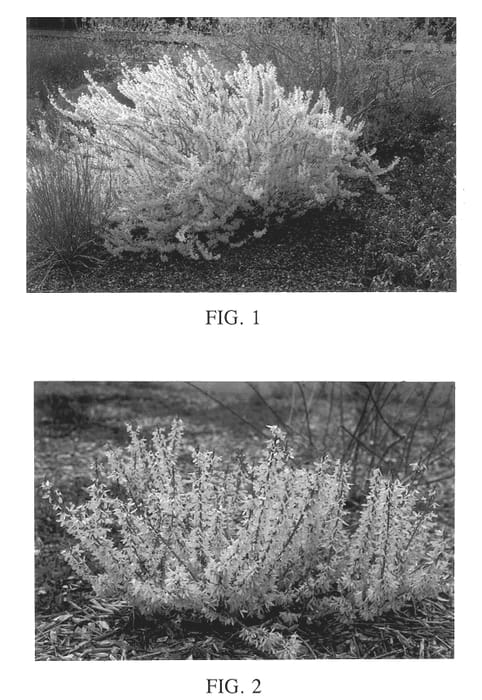
A new and distinct cultivar of Forsythia plant is provided that is a seedling formed following the induced mutation of the ‘Spring Glory’ cultivar (non-patented in the United States). Gamma radiation was utilized to create the mutation. The new cultivar can be readily distinguished from the parent cultivar by the presence of a wide prostrate slow-growing growth habit. Anthocyanin coloration is present at the apex of the sepals. Attractive wide-opening yellow flowers are formed commonly on a single basis with one flower being formed per bud. The winter hardiness is good. The new cultivar also is well suited for growing as attractive ornamentation in the landscape where good control of plant height is to be maintained. The new cultivar requires no special care.
Show the legal claimThe single numbered claim as granted — the legal text that defines what this patent covers.
I claim: 1. A new and distinct Forsythia plant that is derived from the ‘Spring Glory’ cultivar (non-patented in the United States) having the following combination of characteristics: (a) Exhibits wide prostrate growth habit, (b) Bears anthocyanin coloration at the apex of the sepals, (c) Forms attractive dense wide-opening yellow flowers that commonly are singly borne per bud, and (d) Is slow-growing and requires no special care; substantially as shown and described.
Read the full patent: US Plant Patent PP13050 in full — the complete specification, every figure, and the file history.