US Plant Patent PP15299
Flowering pear tree
PUBLIC DOMAIN
Patent expired June 17, 2023. This plant is in the public domain — anyone may propagate and sell it.
Twenty years from the filing date would end on April 17, 2023. This patent earned 61 days of term adjustment for delay at the Patent Office, which is why it runs longer.
The record
- Patent number
- PP15299
- Filed
- April 17, 2003
- Granted
- November 9, 2004
- Expires
- June 17, 2023
- Inventor
- VEYNA SIXTO C; VEYNA STEVEN C
No cultivar name of record
This patent does not name the plant, which is unusual for its date — by the mid-1990s nearly every plant patent carried a cultivar name. The grant identifies this one by its number and by a written description instead.
Nothing here is missing from our records: the patent itself states no name. Where one exists we show it, and we do not invent one.
Abstract
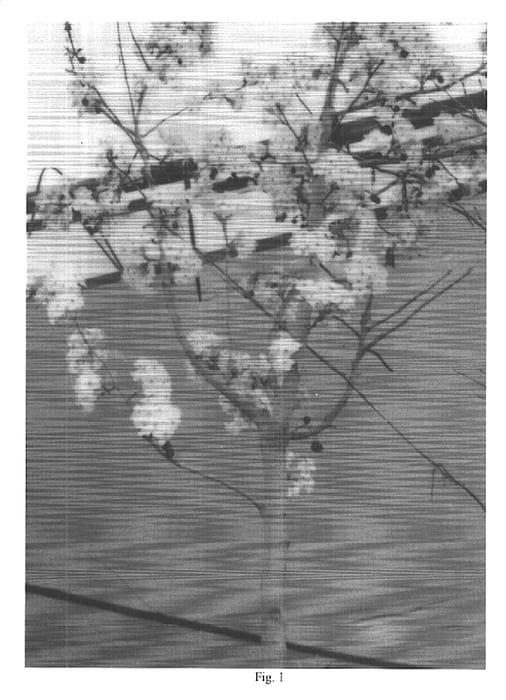
A new and distinct variety of a flowering pear tree named ‘Veyna Flowering Pear’ which can be readily distinguished from other ornamental flowering pear trees, i.e. ‘Bradford’ or ‘Aristocrat’ cultivars of Pyrus calleryana, in that this new invention has brighter foliage and larger leaves than the two above-mentioned cultivars, is less pyramidal in form, and produces a brighter and more intense shade of red three weeks later. This new variety is well suited as an attractive ornamental for landscape.
Show the legal claimThe single numbered claim as granted — the legal text that defines what this patent covers.
We claim: 1. A new and distinct variety of a flowering pear tree named ‘Veyna Flowering Pear’ substantially as illustrated and described that is well suited as an attractive ornamental for landscape, and which can be readily distinguished from other ornamental flowering pear trees, such as the ‘Bradford’ or ‘Aristocrat’ cultivars of Pyrus calleryana, in that this new invention has brighter foliage and larger leaves, is less pyramidal in form, and produces a brighter and more intense shade of red leaves three weeks later than either of the two mentioned cultivars.
Read the full patent: US Plant Patent PP15299 in full — the complete specification, every figure, and the file history.