US Plant Patent PP15595
RLJCC1
Cymbopogon plant named ‘RLJCC1’
PUBLIC DOMAIN
Patent expired July 22, 2022. This plant is in the public domain — anyone may propagate and sell it.
Twenty years from the filing date would end on February 8, 2022. This patent earned 164 days of term adjustment for delay at the Patent Office, which is why it runs longer.
The record
- Patent number
- PP15595
- Filed
- February 8, 2002
- Granted
- March 1, 2005
- Expires
- July 22, 2022
- Assignee
- COUNCIL SCIENT IND RES
- Inventor
- SHAHI ASHOK KUMAR; SHARMA SATYA NARAYAN; PAL SWADESH; CHANDRA SURESH; DUTT PRABHU; BALYAN SURENDRA SINGH; BHAN MAHARAJ KRISHEN; TANEJA SUBHASH CHANDRA; RAINA RAVINDER KUMAR; VERMA VIJESHWAR; ZAHOOR SHAZIA; KAUL MAHARAJ KRISHEN; QAZI GHULAM NABI
Abstract
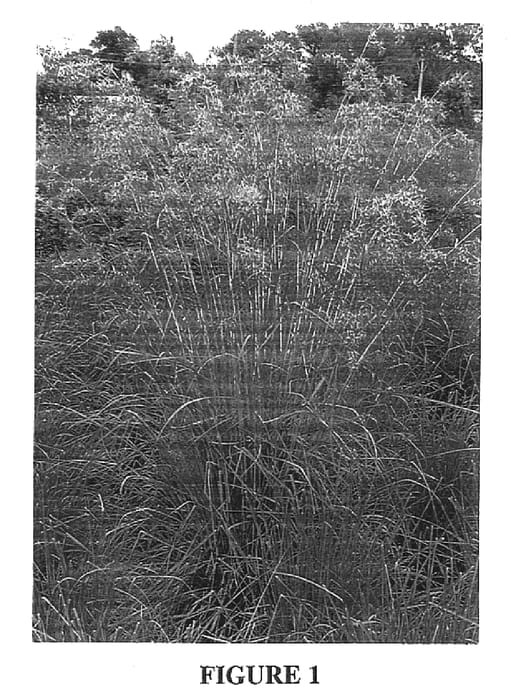
A new and distinct variety of Cymbopogon commutatus grass is provided. The new variety was discovered during a mass selection program that was carried out in India in a cultivated area, and offers significant advantages over a typical plant of the species. More specifically, the new variety exhibits superior drought tolerance, a vigorous perennial growth habit, and lighter green leaves than typically exhibited by the species. The plant produces an essential oil having an enhanced geraniol and geranyl acetate content that is useful to form perfumes and in flavor applications. Asexual reproduction can be readily carried out by the rooting of slips.
Show the legal claimThe single numbered claim as granted — the legal text that defines what this patent covers.
1. A new and distinct Cymbopogon commutatus plant having the following combination of characteristics: (a) displays a perennial vigorous growth habit, (b) commonly forms lighter green leaves than typically exhibited by the species, (c) forms an abundance of roots with superior tillering, (d) displays superior drought tolerance, (e) produces essential oil having an enhanced geraniol and geranyl acetate content, and (f) readily undergoes asexual reproduction by the use of slips; substantially as illustrated and described.
Read the full patent: US Plant Patent PP15595 in full — the complete specification, every figure, and the file history.