US Plant Patent PP19277
Cascading Pink Lady
Crepemyrtle Tree named ‘Cascading Pink Lady’
UNDER PATENT
Still under patent. Protection ends February 3, 2027.
Twenty years from the filing date would end on December 26, 2026. This patent earned 39 days of term adjustment for delay at the Patent Office, which is why it runs longer.
The record
- Patent number
- PP19277
- Filed
- December 26, 2006
- Granted
- September 30, 2008
- Expires
- February 3, 2027
- Assignee
- HAMBUCHEN ROBERT E, HAMBUCHEN BETTY J
- Inventor
- HAMBUCHEN ROBERT E; HAMBUCHEN BETTY J
Abstract
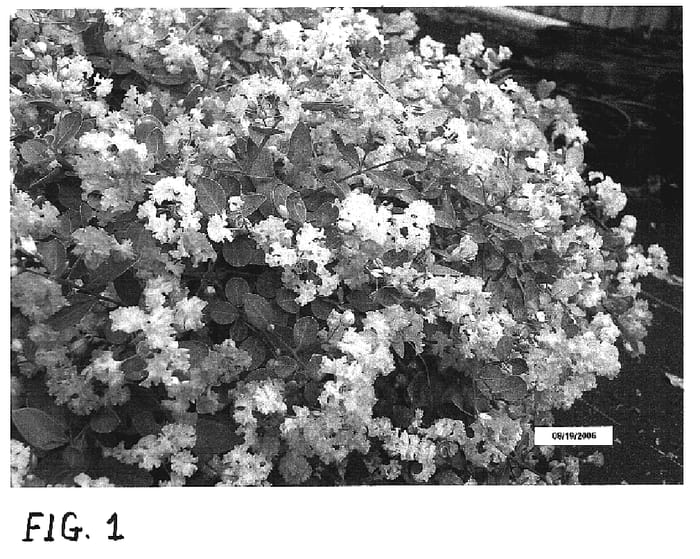
‘Cascading Pink Lady’ is a new distinct variety of Lagerstroemia indica ‘prostrata’, commonly referred to as Crepemyrtle. It is a low growing variety where the primary limbs cascade out and downward while producing multiple secondary along the primaries. It reaches a height of 16 to 20 inches at maturity with substantially no upward growth. It can reach a width of 36 to 40 inches. This cultivar blooms in mid June in Zone 7B and normally is in full bloom by the end of June. Because of its bloom habit it sometimes appears to be a multi-colored Crepemyrtle. While most new blooms are a Red Purple 72D a few blooms are very lite in color, with some appearing almost white. The plant very resistant to powdery mildew and is cold hardy with no visible damage at 8 degrees Farenheit.
Show the legal claimThe single numbered claim as granted — the legal text that defines what this patent covers.
1. We claimed a new and a distinct variety of crepemyrtle plant substantially as described and shown, characterized by a low growing with extensive cascading lateral branching that reaches a mature height of 16 to 20 inches, with substantially no upward growth, with profuse and distinctive soft pink inflorescences that, in a consistent pattern, tend to fade as they begin to mature and this new plant has a very high resistant to powdery mildew.
Read the full patent: US Plant Patent PP19277 in full — the complete specification, every figure, and the file history.