US Plant Patent PP22565
Novcorcar
Coreopsis plant named ‘Novcorcar’
UNDER PATENT
Still under patent. Protection ends August 13, 2030.
No term adjustment or disclaimer is recorded against this patent, so this is the full statutory term — twenty years from the filing date.
The record
- Patent number
- PP22565
- Filed
- August 13, 2010
- Granted
- March 6, 2012
- Expires
- August 13, 2030
- Assignee
- NOVAFLORA INC, DOBRES MICHAEL S
- Inventor
- DOBRES MICHAEL S
Abstract
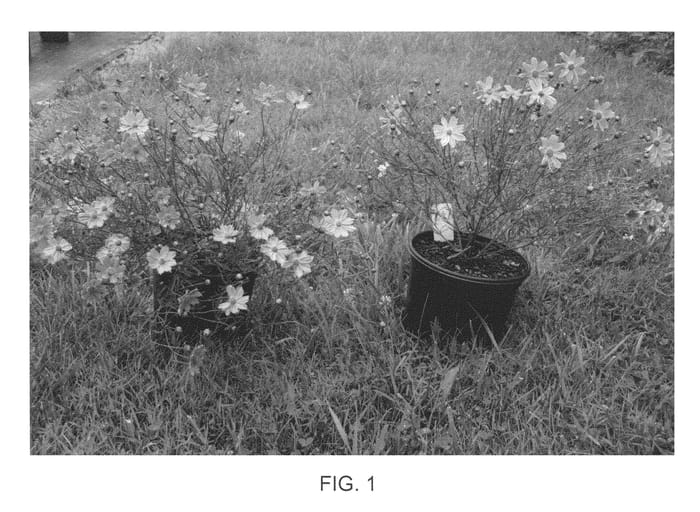
The present Coreopsis verticillata cultivar was created by the gamma-ray mutagenesis of the ‘Crème Brulée’ cultivar. An upright outwardly spreading mounding growth habit is displayed as well as a freely basal branching habit. Lacy bright green foliage is formed. Attractive, smaller daisy-type inflorescences are formed. The plant further can be distinguished by an observation of its less elongated terracotta-colored ray florets. The plant displays a propensity to freely flower for an extended period of time. The plant can be grown to advantage as attractive ornamentation in parks, gardens, and residential settings.
Show the legal claimThe single numbered claim as granted — the legal text that defines what this patent covers.
I claim: 1. A new and distinct cultivar of Coreopsis verticillata plant, substantially as herein described, which: (a) displays an upright outwardly spreading and mounded growth habit, (b) displays a freely basal branching habit, (c) displays lacy bright green foliage, (d) displays a propensity to freely flower for an extended period of time, and (e) forms attractive daisy-type inflorescences which when compared to the ‘Sienna Sunset’ cultivar (U.S. Plant Pat. No. 20,470) are smaller in size and display less elongated darker terracotta-colored ray florets; substantially as illustrated and described.
Read the full patent: US Plant Patent PP22565 in full — the complete specification, every figure, and the file history.