US Plant Patent PP27590
Novacleein
Clethra plant named ‘Novacleein’
UNDER PATENT
Still under patent. Protection ends March 20, 2035.
Twenty years from the filing date would end on December 9, 2034. This patent earned 101 days of term adjustment for delay at the Patent Office, which is why it runs longer.
The record
- Patent number
- PP27590
- Filed
- December 9, 2014
- Granted
- January 24, 2017
- Expires
- March 20, 2035
- Assignee
- CP DELAWARE INC
- Inventor
- DOBRES MICHAEL S
Abstract
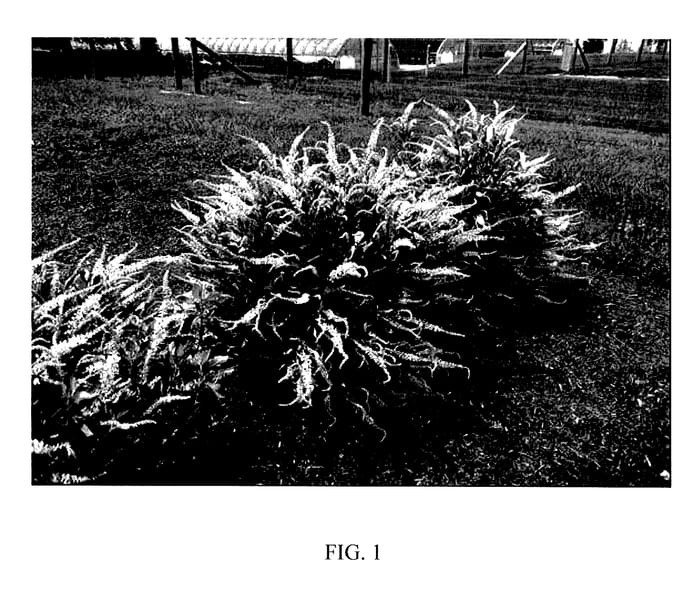
The new plant resulted from the open pollination of the ‘Hummingbird’ variety of Clethra alnifolia (non-patented in the United States) followed by detailed study and selection from among the progeny. An attractive dense mounding substantially round growth habit is displayed that commonly is taller than that of the ‘Hummingbird’ variety. Fragrant white flowers commonly are formed during late July through September in longer racemes than the ‘Hummingbird’ variety. The racemes of the new plant commonly often are twisted and curled. The new plant commonly displays good tolerance to heat, draught, insects and disease. The new plant is well suited for providing attractive ornamentation in a wide range of landscape settings.
Show the legal claimThe single numbered claim as granted — the legal text that defines what this patent covers.
I claim: 1. A new and distinct Clethra alnifolia plant having the following combination of characteristics: (a) exhibits an attractive dense mounding substantially rounded growth habit that at maturity commonly taller than that of the ‘Hummingbird’ variety, (b) forms fragrant white flowers in longer racemes than the ‘Hummingbird’ variety that are often twisted and curled, (c) commonly displays good tolerance to heat, drought, insects and disease, and (d) is well suited for providing attractive ornamentation in a wide range of landscape settings; substantially as illustrated and described.
Read the full patent: US Plant Patent PP27590 in full — the complete specification, every figure, and the file history.