US Plant Patent PP15170
Chaseize
Chrysanthemum plant named ‘Chaseize’
PUBLIC DOMAIN
Patent expired January 15, 2023. This plant is in the public domain — anyone may propagate and sell it.
No term adjustment or disclaimer is recorded against this patent, so this is the full statutory term — twenty years from the filing date.
The record
- Patent number
- PP15170
- Filed
- January 15, 2003
- Granted
- September 21, 2004
- Expires
- January 15, 2023
- Assignee
- SELECTION NEW PLANT SARL
- Inventor
- CHALLET JEAN-PIERRE
Abstract
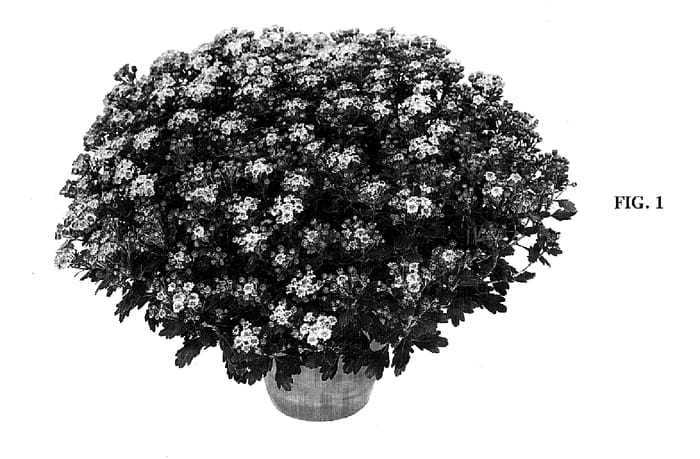
A new and distinct Charm Chrysanthemum cultivar is provided that is the result of a controlled breeding program. Attractive small daisy-like blossoms are formed in profusion in clusters having green disc florets that change to yellow with maturity and two rows of pink ray florets that change to light pink towards the extremity with maturity. The growth habit is bushy, dense, and well-branched with short internodes and yields a generally uniform and spherical overall plant. The foliage is small and dark green in coloration, and blends nicely with the blossom coloration. The upper surface of the leaves possesses a margin that is light greyed-green in coloration. The response time is approximately eight weeks. The natural flowering time is late-October. When mature the blossoms emit pollen that is yellow in coloration. The plant grows well in pots, and possesses no particular susceptibility to insects and diseases.
Show the legal claimThe single numbered claim as granted — the legal text that defines what this patent covers.
I claim: 1. A new and distinct cultivar of Charm Chrysanthemum plant that displays: (a) a bushy, dense, well-branched, and generally spherical growth habit with short internodes, (b) profusely forms attractive small daisy-like blossoms having green disc florets that change to yellow with maturity, and two rows of pink ray florets that change to light pink towards the extremity with maturity, (c) forms decorative small dark green leaves with a greyed-green margin on the upper leaf surface, (d) forms yellow pollen when the blossoms are mature, and (e) an ability to grow well in pots; substantially as illustrated and described.
Read the full patent: US Plant Patent PP15170 in full — the complete specification, every figure, and the file history.