US Plant Patent PP20234
Nettleton Creamy White
Black berry plant ‘Nettleton Creamy White’
PUBLIC DOMAIN
Patent expired August 28, 2026. This plant is in the public domain — anyone may propagate and sell it.
No term adjustment or disclaimer is recorded against this patent, so this is the full statutory term — twenty years from the filing date.
The record
- Patent number
- PP20234
- Filed
- August 28, 2006
- Granted
- August 25, 2009
- Expires
- August 28, 2026
- Assignee
- NETTLETON JOHN R, NETTLETON SCOTT E
- Inventor
- NETTLETON SCOTT E; NETTLETON JOHN R
Abstract
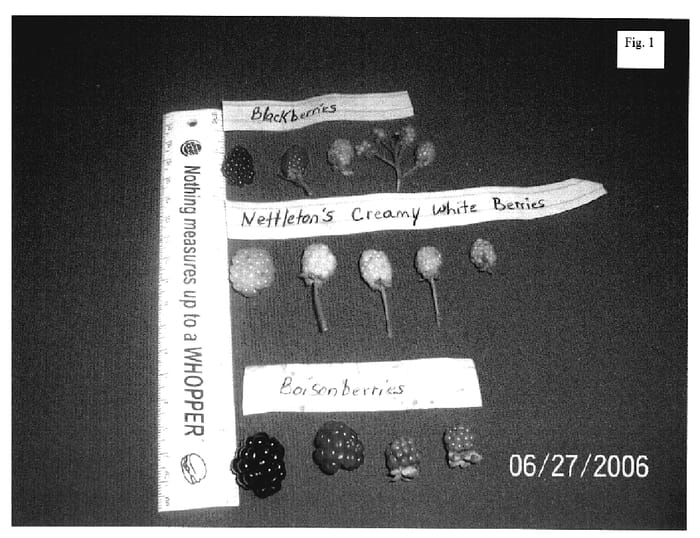
A new and distinct variety of upright blackberry plant that in all characteristics looks similar to a wild blackberry but is distinct in that the fruit when fully ripened is the color of an almost translucent creamy white and not the reddish purple color of the wild blackberry. The new variety named “Nettleton Creamy White” is an upright plant, is a biennial, thorny, with five leaves per stem along the canes. The berries are produced on the 2 nd year canes and are larger then the standard wild blackberry fruit. The creamy white fruit is medium in size and has a sweet taste to them. The cane and leaves are light to bright green and have the absence of the anthocyanin coloration.
Show the legal claimThe single numbered claim as granted — the legal text that defines what this patent covers.
1. A new and distinctive variety of upright blackberry plant, substantially as described and illustrated herein, and is characterized by having a creamy white colored fruit with the absence of anthocyanin coloration in the canes and of leaves of the plant.
Read the full patent: US Plant Patent PP20234 in full — the complete specification, every figure, and the file history.